The Silicon Valley Real Estate "Repricing": Why 2026 is a New Ballgame
Is Silicon Valley real estate actually appreciating, or is it something else? 📉

If you've been following the Silicon Valley real estate market in 2026, you’ve likely noticed a confusing trend. You might see one home sell in days with multiple offers, while another sits on the market for weeks. You see buyers with deep pockets entering the fray, and the old "rules of thumb" seem to be failing.
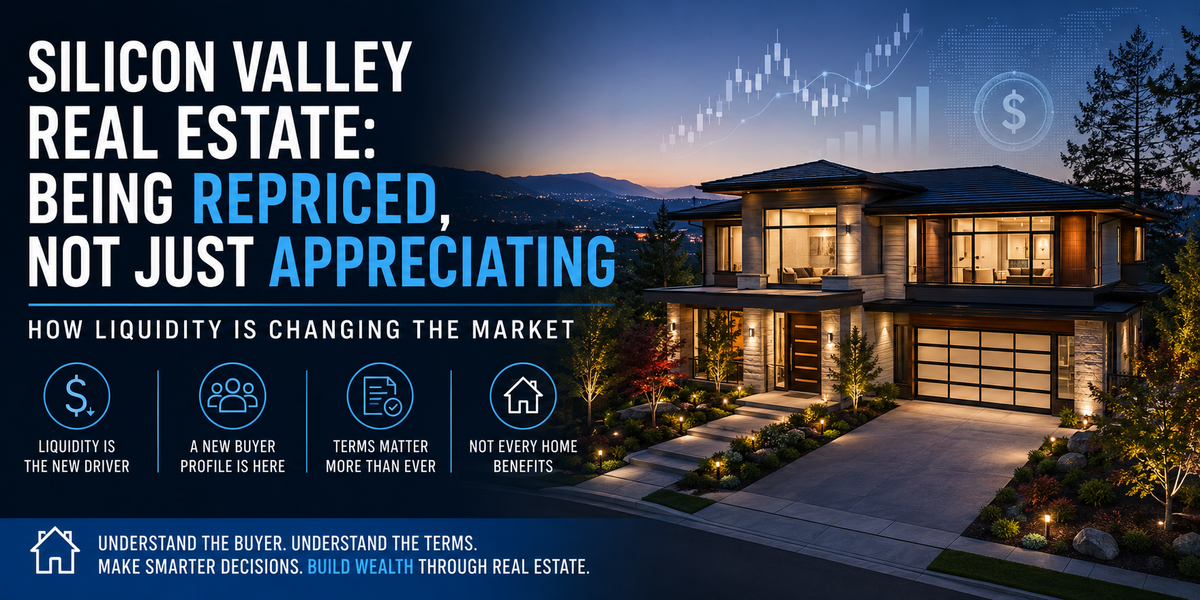
If you’re waiting for the market to return to the frenzy of 2021 or hoping for a broad collapse, you might be misreading the room. We aren't just seeing simple "appreciation"—we are seeing a fundamental repricing of the market.
Here is what is actually happening behind the headlines.
🎥 Watch the full video here: https://youtu.be/8ZU4eyk0YG0
AI Money Is Repricing Silicon Valley Real Estate — Not What You Think
Appreciation vs. Repricing: What’s the Difference?
We often think of the market as a single tide that lifts all boats. That’s appreciation. But repricing is different. It’s when the buyer pool shifts, the source of money changes, and the old metrics (like interest rates or broad averages) no longer explain why a home sold for a specific price.
In 2021, the repricing force was cheap debt. In 2022, the repricing force was rising rates. Today, in 2026, the dominant force is liquidity.
The New Silicon Valley Buyer: Liquidity Over Debt
The traditional "W2 buyer" with a 20% down payment is still active, but they are no longer the only force setting the market price. We are seeing a new tier of buyer driven by:
- AI and Tech Equity: Liquidity events—such as tender offers, secondary stock sales, and RSU vesting cycles—are putting massive amounts of "ready-to-use" cash into the hands of buyers.
- Cash-Heavy Positions: For these buyers, the mortgage rate is less of a "make-or-break" factor than it is for the average buyer. They are often putting 30% to 40% down or even making all-cash offers.
- Value of Time: These buyers aren't just purchasing square footage; they are buying convenience, certainty, and a "turnkey" lifestyle. They are willing to pay a premium to skip the "project" phase of homeownership.
Why This Isn't 2021
It’s easy to look at a home selling for over-asking price and scream, "It's 2021 all over again!" But the data tells a different story.
In 2021, a "rising tide" of low rates lifted almost every segment. Today, the market is splintered. The top-tier market is being pushed higher by specialized liquidity, while the "move-up" middle market is feeling the squeeze of higher interest rates and affordability constraints.
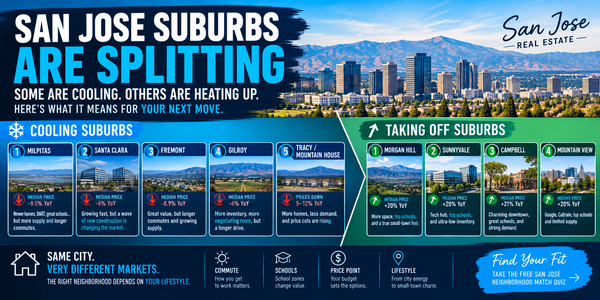
The result? A tale of two markets. Homes in high-demand "micro-locations"—like Palo Alto, Los Altos, or Menlo Park—are behaving entirely differently than homes in more suburban or entry-level pockets.
Strategy for the Current Market
If you are trying to navigate this landscape, a "one-size-fits-all" approach will lead to frustration. Here is how to sharpen your strategy:
For Sellers:
- Don't Just Look at Comps: While recent sales matter, look at the terms. Who bought the house down the street? Was it a cash-heavy tech buyer, or a traditional borrower? That determines your pricing strategy.
- Preparation Matters More Than Ever: Because today’s buyers are paying for "certainty," the homes that sell fastest are the ones that are move-in ready and beautifully presented.
For Buyers:
- Know Your Playing Field: Are you competing against cash-heavy buyers in a tech-centric neighborhood? If so, chasing those "hot" properties with a standard FHA or conventional loan might be a losing game.
- Get Fully Underwritten: Being "pre-approved" is just the baseline. In a market where terms (like lack of contingencies) matter, being fully underwritten can be your biggest competitive edge.
- Find Your "Value" Pocket: If you can’t win in the ultra-competitive luxury core, consider neighborhoods where you have more breathing room or look for properties that need cosmetic updates—where the "cash-heavy" buyers might not want to spend their time.
The Bottom Line
Silicon Valley isn't "hot" or "cold" across the board—it is selective. The old pricing logic is breaking down because the buyers aren't all playing by the same rules anymore.
If you're trying to figure out what your home is worth or how to position your next offer, don't just watch the national headlines. Look at the specific buyer pool for your street, your zip code, and your price point.
Need a roadmap for your specific situation? Whether you are dealing with a tech equity event, moving out of the valley, or trying to find a home in a competitive neighborhood, I’m here to help you cut through the noise. Reach out anytime—let's make a plan that actually makes sense for the market we are in today.
To see the full breakdown of these market forces, watch the full video here: https://youtu.be/8ZU4eyk0YG0
AI Money Is Repricing Silicon Valley Real Estate — Not What You Think