Why the House You Grew Up In Still Lives Inside You

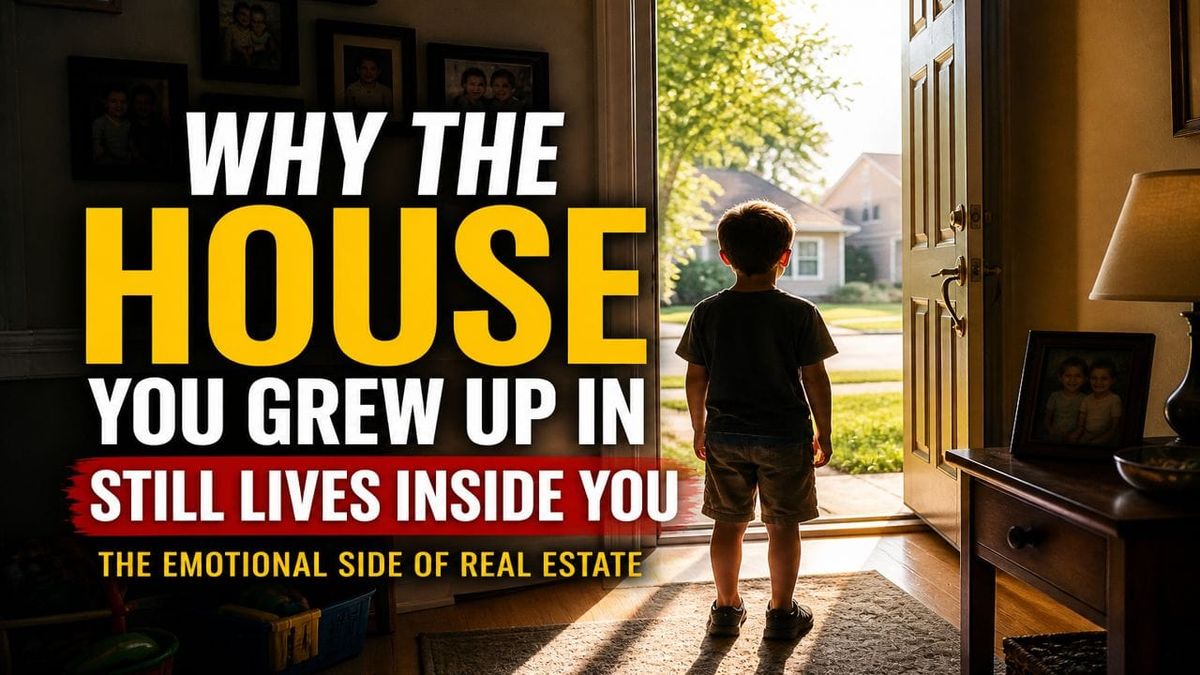
There’s a reason certain homes feel familiar—even when you’ve never been inside them before.
You walk through the front door. You notice the way the light hits the floor. You hear the quiet of the neighborhood. Maybe it’s the smell of the kitchen, the layout of the hallway, or the feeling of the backyard. And suddenly, something inside of you says:
“I know this feeling.”
What’s interesting is that the feeling often has very little to do with the house you’re standing in.
It has everything to do with the house that shaped you.
🎥 Watch the full video here:👇
The House You Grew Up In Never Really Leaves You
Whether you grew up in one home your entire childhood or moved from place to place, the homes you experienced early in life leave an emotional imprint on you.
Some people grow up in the same house for decades. Some return to that home later in life. Others never go back at all. But regardless of what your childhood looked like, the emotional definition of “home” tends to stay with you.
Not always consciously.
Sometimes it shows up in small ways:
- The type of kitchen you love
- The kind of street you want to live on
- The feeling you get walking into a certain room
- The way you arrange furniture
- Even the atmosphere you want your future home to have
These aren’t random preferences.
They are emotional reference points built from memory.
Why Some Homes Instantly Feel “Right”
Two people can walk into the exact same house and have completely different reactions.
One person says:
“This feels warm and welcoming.”
Another says:
“Something feels off.”
Same house. Same neighborhood. Same price point.
Completely different emotional response.
Why?
Because nobody walks into a home as a blank slate.
We walk into homes carrying:
- Memories
- Experiences
- Comforts
- Fears
- Nostalgia
- Expectations
For some people, home represented safety and connection.
For others, it represented stress, noise, or instability.
Those early experiences quietly shape what people look for later in life.
The Psychology Behind Home Buying
This is what makes real estate so fascinating.
Buying a home is rarely just about square footage, interest rates, or countertops.
It’s about identity.
It’s about emotion.
It’s about finding a place where someone can picture their life unfolding.
Some buyers want:
- A large kitchen because that’s where family gathered growing up
- A quiet neighborhood because they grew up in one
- Open layouts because their childhood home felt cramped
- A backyard because it represented freedom
And some people want the complete opposite of what they grew up with because, to them, that feels like growth.
That’s why buyers often ignore the “perfect” home on paper.
A house may check every logical box:
- Great school district
- Updated kitchen
- Ideal location
- Right price
But if it doesn’t feel right emotionally, buyers hesitate.
Then another house appears.
Maybe it’s imperfect. Maybe the layout is unusual. Maybe the kitchen needs work.
But they walk in and suddenly they can see it:
- Sunday mornings
- Family dinners
- Kids running down the hallway
- Coffee in the kitchen
- Life happening there
That emotional connection changes everything.
Because people don’t just buy houses.
They buy possibility.
What Sellers Need to Understand
This emotional connection matters just as much for sellers.
When you sell a home, you are not simply selling:
- Bedrooms
- Bathrooms
- Flooring
- Countertops
- Square footage
You’re selling a feeling.
The goal is not perfection.
The goal is helping buyers emotionally picture themselves living there.
That’s why presentation matters:
- Lighting matters
- Smell matters
- Cleanliness matters
- Flow matters
- First impressions matter
The moment a buyer emotionally moves into a home before they ever write an offer, the house becomes more than a property.
It becomes a possibility.
The Emotional Side of Real Estate
Real estate data matters:
- Price matters
- Market conditions matter
- Interest rates matter
- Location matters
But homes are deeply personal.
A home is where:
- People grow up
- Families change
- Memories are created
- Holidays happen
- Grief is processed
- New beginnings start
That emotional reality doesn’t always show up in spreadsheets or market reports.
But it influences nearly every buying decision people make.
Why Your Childhood Home Still Lives Inside You
Long after you move out…
Long after the furniture changes…
Long after someone else lives there…
The house you grew up in still carries a version of you.
And in many ways, you carry it forward into every future home you visit, dream about, or create for someone else.
Because a house is built with materials.
But a home is built with memory.
And maybe that’s why the house you grew up in never fully leaves you.